Showing posts with label gardening. Show all posts
Showing posts with label gardening. Show all posts
Saturday, February 25, 2012
Review of A Garden of Love
In A Garden of Love, Thomas B. Clarke shares his personal observations about the flowers he grows in his work for the Gethsemane Prayer Garden at Faith Chapel in Syracuse, New York. The purpose of the garden is not that it just be a pretty place to enjoy "lots of beautiful flowers. Rather, the flowers are intended to help soften our hearts so that we may be more effective in speaking to and hearing the voice of the Lord." (unnumbered page preceding the Acknowledgments page).
I liked that there were full color pictures on each two page spread. I enjoyed reading about flowers, many of which I have never seen growing in Southern Alabama gardens, and none of which I grow. I enjoyed the author's encouragements for the Christian faith, relating each to scripture.
I had a hard time relating the particular plant chosen to the characteristic he wanted to emphasize. For instance, he chose Coneflower (Echinacea) to relate to patient endurance. He said that he chose it because it looks like a crown. I don't see any crowns in that flower even after reading the entry. I also don't really follow the idea of crowns for patient endurance. It seems that it would have been more appropriate to use a flower that endured over a long season or was perennial. I don't know. It just seemed a reach to relate this flower to this spiritual characteristic.
He did not use herbs and flowers that have traditionally been associated with different characteristics. For instance, sage has long been associated with wisdom. Every flower he chose was chosen because he personally likes the plant. This is fine. It just seemed that some of the choices were made not because of the plant, but because he likes the spiritual characteristic and wanted to discuss it.
I would rate this book as readable. This one problem should be noted, because it really took from the power of the book.
I received this book for free from Bookcrash.com in exchange for an honest review.

Friday, December 9, 2011
Summaries of Several Spurgeon Sermons about Isaiah 28:24 to 29
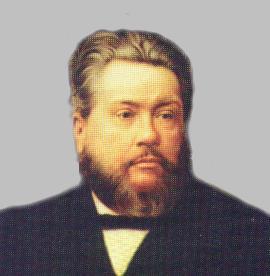
I have recently read three of his sermons relating to the scripture Isaiah 28:24 to 29, which say
"When a farmer plows for planting, does he plow continually? Does he keep on breaking up and harrowing the soil? When he has leveled the surface, does he not sow caraway and scatter cumin? Does he not plant wheat in its place, barley in its plot, and spelt in its field? His God instructs him and teaches him the right way. Caraway is not threshed with a sledge, nor is a cartwheel rolled over cumin; caraway is beaten out with a rod, and cumin with a stick. Grain must be ground to make bread;so one does not go on threshing it forever. Though he drives the wheels of his threshing cart over it, his horses do not grind it. All this comes from the LORD Almighty, wonderful in counsel and magnificent in wisdom."
This scripture has really been on my mind lately. I have been pondering it. And Spurgeon is just the ticket for carrying the pondering farther.
That's the background.
Now for only the highest highlights from my readings. I may come back and give more info on each sermon in another few posts.
From The Ploughman (Remember, Spurgeon was British, so the spelling is British.)
- The ploughman perseveres. He keeps at his work until it is done.
- When the Holy Spirit brings a man to the place he is downright earnest in his praying, it won't be long before he finds peace.
- Keep your hand to the gospel plough. Continue in well-doing.
- Then, answer the question in negative. Ploughman doesn't only plough. He has other jobs.
From A Feast for Faith
- Prayer: Lord, work salvation in me. I will have nothing to do with my own merit or strength. I will be dead that Thou mayst live in me. I will be nothing. Be Thou my all in all.
- Sitting at Jesus' feet with Mary is the very best preparation for doing the work of Martha without being cumbered by it.
- Don't run ahead of the cloud that leads by day. Keep in pace with the Spirit.
- When we are content to wait on God's plan, it opens to us very wonderfully.
- When we do know God's plan, we must carry it out, for the same God who is "wonderful in counsel" is "excellent in working." (KJV).
- When you resolve to carry out God's plan, expect His singular assistance.
- Whenever there is the working of the sword of Joshua and the prayers of Moses, there will also be the almighty arm of God.
From The Principal Wheat
- "The wisdom of earth is a reflection of the light of heaven."
- God is the great teacher of agriculture and handicrafts.
- If God instructs in gardening, will He not much more instruct us in the "tillage of our lives", if we ask?
- The farmer knows what is the most important crop to cultivate and makes it his own.
- The farmer gives the principal thing the principal place.
- The farmer selects the best seed for sowing, not accepting mealy, moldy seeds.
- The farmer tends the principal crop with principal care.
- Do these things, because from your principal care you may expect your principal crop.
I would encourage you to read the entire sermons at the connecting link, if you get a chance. But even if you don't, I hope these notes will encourage and instruct you today.
Saturday, September 10, 2011
Encouragement for the Weary Gardener or Farmer
Back in July of this year, I really contemplated giving up the garden. I thought I would admit defeat, and throw in the towel.


I had been working in the garden every day, most of the time at least twice a day. I sowed. I watered. I weeded. I picked bugs off by hand. I refrained from using pesticides. I refrained from using chemical fertilizers. I prayed. I composted.(And, really, sometimes I found that to be really gross I read every book I could get from the library (about 40 of them).
But with all this effort, and time, sweat and toil, I only harvested 5 cherry tomatoes and ZERO slicing tomatoes out of 23 tomato plants of different varieties (because they all contracted a disease carried by whiteflies and died). I harvested 5 eggplants total. I harvested at most 10 green beans at a time, about 10 times. I harvested 5 green peppers, and 5 hot peppers.
To be honest, I did harvest 58 jars of pears, but I had nothing to do with that harvest. The tree was well-established before I was even born, and much before we ever bought the property. I also harvested a jar of dried basil, half a jar of dried oregano, and a jar of dried lemon balm (for winter teas).
So, all in all, I began to feel that this whole gardening thing was not worth the effort. Maybe I should go back to flowers. I never seemed to have any trouble growing flowers. Or maybe I should just give up altogether.
That's where I was when I got the following encouragements from scriptures.
I found it amazing that scripture speaks directly to the exact problem I was having. Sometimes you succeed, and sometimes you fail, but keep sowing. You don't know whether this will succeed or that will, or both will do equally well. (That would be a harvest I would like to see.)
Sow your seed in the morning and at evening do not let your hands be idle, for you do not know which will succeed, whether this or that, or whether both will do equally well. Ecclesiastes 11: 6
Be patient, then, brothers and sisters, until the Lord’s coming. See how the farmer waits for the land to yield its valuable crop, patiently waiting for the autumn and spring rains. You too, be patient and stand firm, because the Lord’s coming is near. James 5: 7-8
Also, it was amazing to me to notice that the James scripture specifically connects waiting for harvest to waiting for the Lord's return. I had never noticed that before. I will not give up looking for my Lord. And I will be patient and stand firm with the garden, too.
So my encouragement to you is the same one that I received. Don't give up. Keep trying. Try something new if this isn't working. You will eventually learn this. You will eventually harvest something. Just keep trying and keep learning. Add your failures to your education and you will eventually succeed. The only real failure is quitting.


I had been working in the garden every day, most of the time at least twice a day. I sowed. I watered. I weeded. I picked bugs off by hand. I refrained from using pesticides. I refrained from using chemical fertilizers. I prayed. I composted.(And, really, sometimes I found that to be really gross
I read every book I could get from the library (about 40 of them).But with all this effort, and time, sweat and toil, I only harvested 5 cherry tomatoes and ZERO slicing tomatoes out of 23 tomato plants of different varieties (because they all contracted a disease carried by whiteflies and died). I harvested 5 eggplants total. I harvested at most 10 green beans at a time, about 10 times. I harvested 5 green peppers, and 5 hot peppers.
To be honest, I did harvest 58 jars of pears, but I had nothing to do with that harvest. The tree was well-established before I was even born, and much before we ever bought the property. I also harvested a jar of dried basil, half a jar of dried oregano, and a jar of dried lemon balm (for winter teas).
So, all in all, I began to feel that this whole gardening thing was not worth the effort. Maybe I should go back to flowers. I never seemed to have any trouble growing flowers. Or maybe I should just give up altogether.
That's where I was when I got the following encouragements from scriptures.
I found it amazing that scripture speaks directly to the exact problem I was having. Sometimes you succeed, and sometimes you fail, but keep sowing. You don't know whether this will succeed or that will, or both will do equally well. (That would be a harvest I would like to see.)
Sow your seed in the morning and at evening do not let your hands be idle, for you do not know which will succeed, whether this or that, or whether both will do equally well. Ecclesiastes 11: 6
Be patient, then, brothers and sisters, until the Lord’s coming. See how the farmer waits for the land to yield its valuable crop, patiently waiting for the autumn and spring rains. You too, be patient and stand firm, because the Lord’s coming is near. James 5: 7-8
Also, it was amazing to me to notice that the James scripture specifically connects waiting for harvest to waiting for the Lord's return. I had never noticed that before. I will not give up looking for my Lord. And I will be patient and stand firm with the garden, too.
So my encouragement to you is the same one that I received. Don't give up. Keep trying. Try something new if this isn't working. You will eventually learn this. You will eventually harvest something. Just keep trying and keep learning. Add your failures to your education and you will eventually succeed. The only real failure is quitting.
Subscribe to:
Comments (Atom)